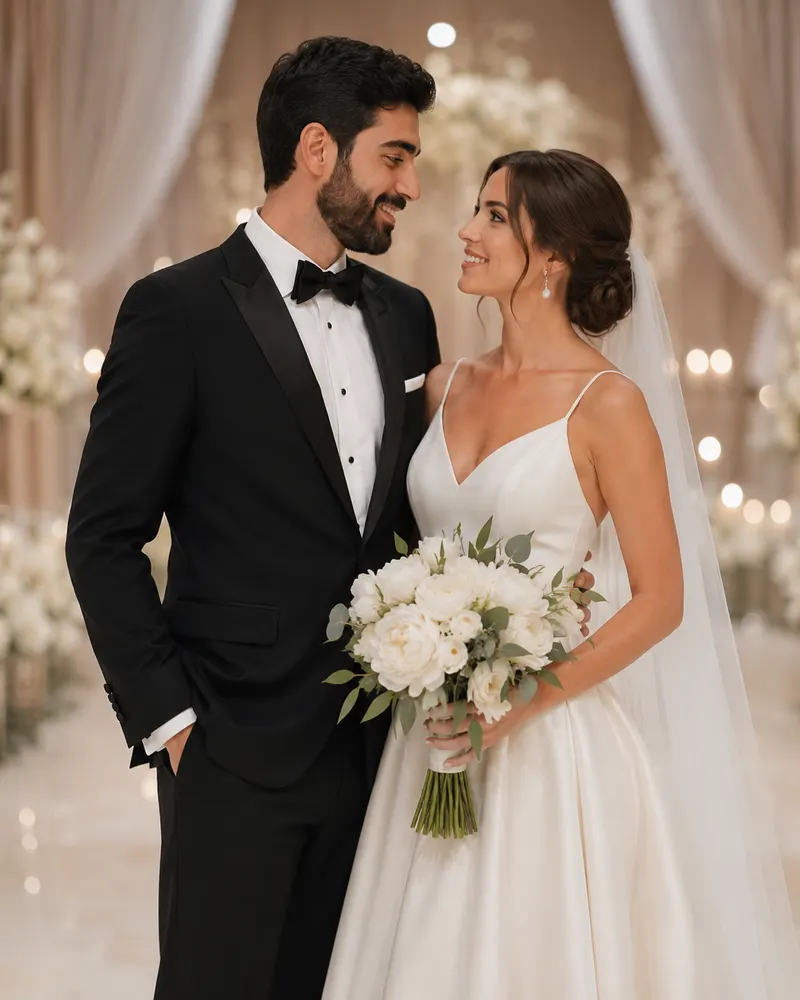
Once the wedding dust settles, the sweetest week begins: the seven days of celebration. Each evening a different circle hosts the newlyweds for a festive meal that closes with the seven blessings sung again. Invitations to these nights are a different creature from the wedding invitation: small, personal, and usually arranged at the last minute. Here is how to get them right.
What sheva brachot are and why the invitation differs
Sheva brachot are seven days of joy that begin right after the wedding, during which it is customary to hold festive meals for the couple in the presence of “new faces” - guests who were not at the wedding itself. Each evening is its own small event, so its invitation breathes differently.
Unlike a wedding invitation, which formally announces the big day and lists the parents’ names, a sheva brachot invitation is a warm call to the table.
- A personal tone: “married again at our table” rather than formal language.
- A small scale: usually ten to forty people, not hundreds.
- First names suffice: “Sheva brachot for Roni and Adel,” with no long surnames.
- Booked late: most evenings are arranged only after the chuppah, once it is clear who hosts when.
For the bigger picture on moving from print to digital, it is worth reading the complete guide to digital wedding invitations.
Who hosts each evening
The charm of sheva brachot is that no single person arranges the whole week. The couple usually stays out of the logistics, and the circles split the evenings among themselves.
- Parents: the bride’s side and the groom’s side each take an evening or two, often at home or in a small event garden.
- Friends: a younger, livelier night, sometimes in someone’s apartment.
- Workplace or yeshiva: colleagues or study partners hosting around one large table.
- Extended family: aunts, grandparents, or neighbors who want a share in the joy.
Since each circle hosts separately, it is convenient for the host to send the invitation in their own name. That way guests immediately know whose table they are joining and whom to RSVP to.
Which details the invitation must include
The invitation should be short, but with nothing missing. A sheva brachot evening is arranged fast, and if the address or time is vague, guests simply will not show up. These are the details that always belong:
- The bride and groom’s names (first names only).
- The name of that evening’s host.
- The weekday, plus the Hebrew and Gregorian date.
- The start time, and if relevant the time of the blessings.
- A full address with a Waze or Google Maps link.
- An RSVP link on WhatsApp.
- A short note as needed: “festive dress, please” or “bringing new faces.”
If you are unsure how to phrase it, most of the principles in our guide to wedding invitation wording apply here too, just in a softer, shorter version.
Sheva Brachot for Roni and Adel You are warmly invited to a festive evening at our home Tuesday, 28 Nisan, 28.4.2026 At the Levi family, 14 HaAlon Street, Ra’anana Doors at 8:00 PM, blessings at 9:30 PM Kindly RSVP: [WhatsApp] If you can, we would love new faces
Why a digital invitation fits sheva brachot exactly
Sheva brachot are the classic case where printing simply makes no sense. Evenings are settled within days, lists change, and everything happens on WhatsApp anyway. A digital invitation solves precisely that:
- Speed: send it the moment a date is locked, even late last night.
- Updates without embarrassment: time moved? A small change to the file, and you resend the same link.
- Zero printing cost: instead of hundreds of shekels on cards, one design serves the whole week.
- Navigation and RSVP in one place: Waze and the RSVP are built in, with no copying addresses by hand.
- Easy sharing: every host forwards the invitation to their own group in one tap.
On price, a digital sheva brachot design usually runs from a few dozen to a few hundred shekels, far less than printing and physical delivery. RSVPs can be managed in a dedicated WhatsApp group, and small gifts are easy to send by Bit or PayBox when someone cannot make it.
How to keep the tone intimate and graceful
The difference between a sheva brachot invitation that feels warm and one that feels like a form is mostly tone. A few simple rules of thumb:
- Write in the first person: “we would love to see you” beats formal phrasing.
- Keep the design clean: one background, one or two fonts, and a soft color that echoes the wedding.
- Do not overload it: one evening, one host, one detail of each kind.
- Match the style to the circle: a friends’ night can be playful, a parents’ night more refined.
If you are riding a wave of events around the wedding, like a henna ceremony invitation, it helps to keep one visual language across the whole series so all the invitations feel like one family.
We would love to accompany you too: pick the package that suits you, and let us continue together on WhatsApp to design a sheva brachot invitation that feels exactly like you.