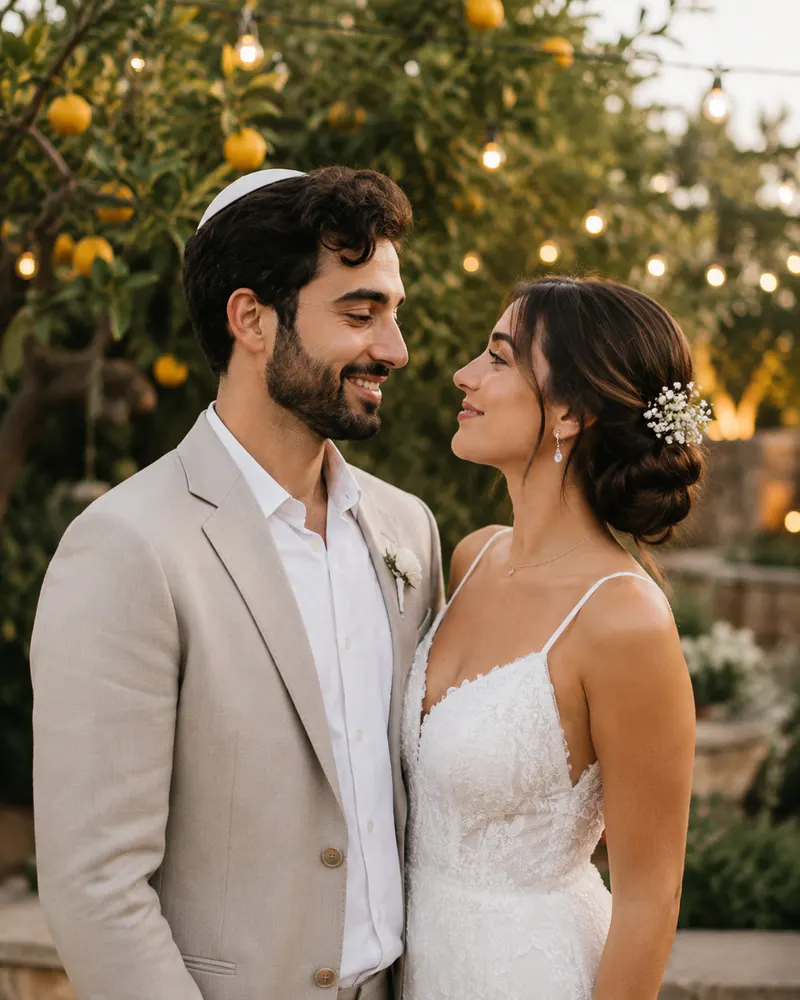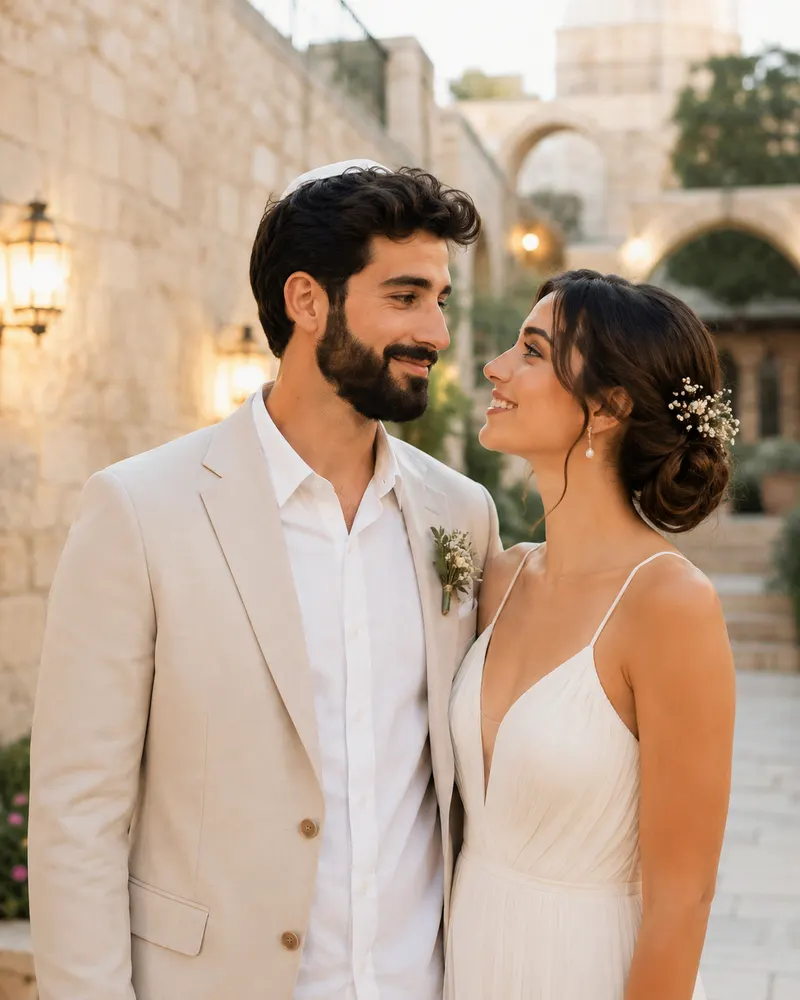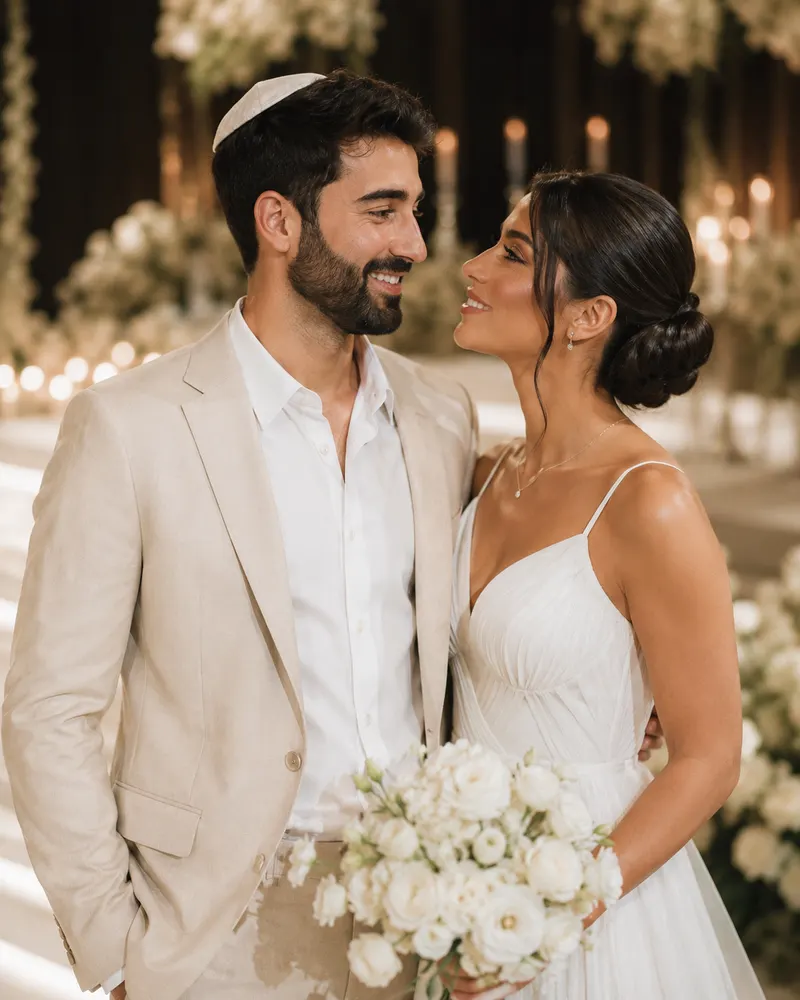
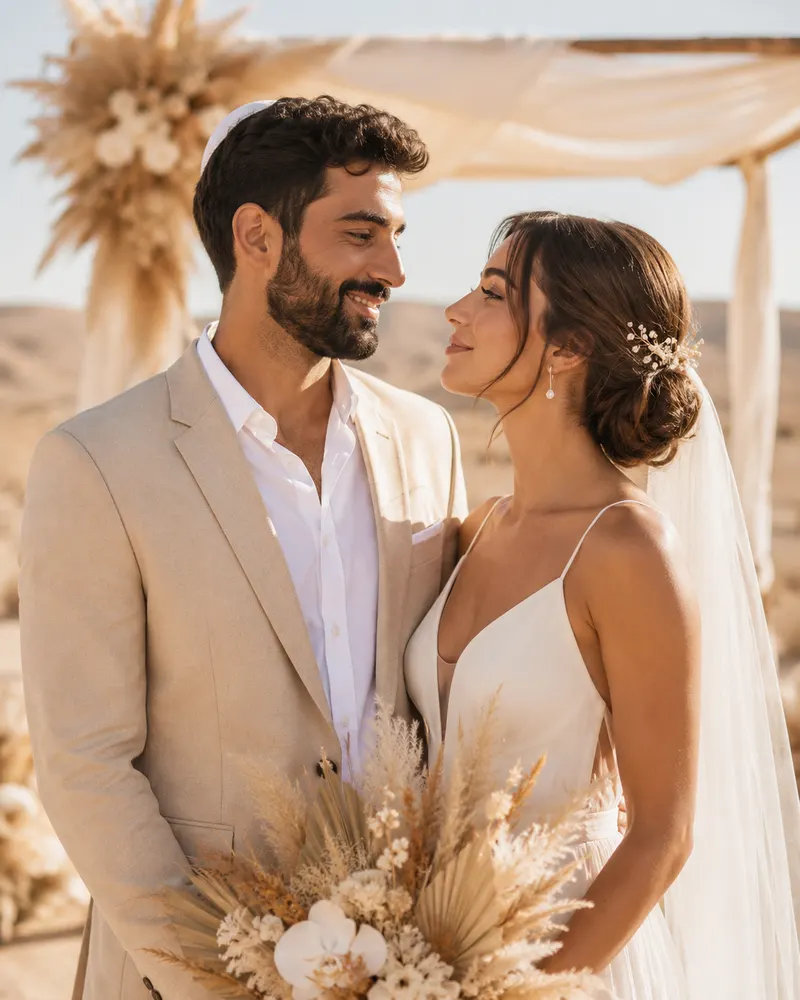
Almost every guest at a chuppah wants to be part of the moment, but not everyone knows what is happening or in what order. A wedding ceremony program is the small, elegant fix: a short order of service that walks guests through the ceremony, from the entrance to the breaking of the glass. Designed well and built into your digital invitation, it turns a moving moment into one your guests truly share.
What a ceremony program is and why it matters
A ceremony program, sometimes called the order of service, is a short description of what is about to happen under the chuppah. At many weddings in Israel, guests arrive from a mix of backgrounds: observant, traditional, secular, and sometimes relatives experiencing their first Jewish ceremony. A clear order helps everyone feel at home.
Beyond the practical help, a ceremony program signals care and attention. It tells your guests you thought about them and wanted them to understand and feel moved alongside you. That is the same principle running through our complete guide to digital wedding invitations: every small detail builds the experience.
What to include in a chuppah program
A Jewish chuppah ceremony is built from traditional stages you can present in accessible language. Here are the common elements:
- The couple’s entrance — the groom and bride walking to the chuppah, usually escorted by their parents.
- Circling — the bride circling the groom (common in some communities, seven or three times).
- Betrothal and kiddushin blessings — the rabbi blesses, the groom places the ring and recites the words of betrothal.
- Reading of the ketubah — the marriage document read aloud, often by someone close to the family.
- The seven blessings — the Sheva Brachot recited by beloved family and friends.
- Breaking the glass — the moment everyone calls out mazal tov.
You do not have to include everything. Choose the moments that matter to you, and give each stage one warm, clear line.
Helping guests follow along
A guest who understands the moment is a guest who feels it more. A few simple ways to do that:
- Write in everyday language, not religious jargon. Instead of just naming a blessing, add a short note on what it means.
- Mark the moments where guests are expected to react, for example ‘here everyone calls out mazal tov’.
- If family members take part in the seven blessings, you can name them as a gesture.
- Keep it short. A ceremony program is a compass, not a full script.
A digital invitation makes this especially easy: the guest opens the link on WhatsApp, scrolls to the ceremony program, and can even open Waze or Google Maps directions to the hall or garden venue from the same screen. Everything in one place, with no paper card crumpling in a pocket.
Matching the ceremony program to your suite
Your ceremony program is part of the wedding’s visual story, not a separate piece. When it is designed in the same language as the invitation, the result feels whole.
- The same font and weight as the main invitation.
- The same color palette, in our case the warm coral and peach tones.
- The same ornaments: if the invitation has a delicate floral motif, it returns here too.
If you are still settling on the overall style, it is worth browsing wedding invitation design ideas by style and choosing a line that will carry across everything, from the invitation to the ceremony program.
A ready-to-use example structure
Here is an example structure you can adopt and adapt. Notice how short and clear everything stays:
Order of the Ceremony The couple enter the chuppah, escorted by their parents The rabbi recites the betrothal blessing The ring is placed, with the words of betrothal Reading of the ketubah The seven blessings, recited by close family Breaking the glass, and here everyone calls out mazal tov together And straight afterward, we celebrate
This structure works just as well for secular or mixed ceremonies: simply swap or remove stages as needed. The language should sound like you, not like text copied from another site.
What it costs and how it fits the digital invitation
Adding a designed ceremony program to your digital invitation is usually a small add-on rather than a separate expense. In the digital world there is no per-guest printing cost, no delivery, and updates are instant. If you change something at the last minute, the file updates and guests always see the right version. Printing separate ceremony cards at the venue, by contrast, can add a few hundred shekels to the budget and usually ends the night left on the tables.
As you write the text, the wording of the invitation itself should match the ceremony program in style and tone. For inspiration on phrasing, we have a separate guide on how to word a wedding invitation that pairs nicely with this work.
If you have read this far, you are already thinking about your guests’ experience exactly the way we do. Pick the package that suits you, and let us continue together on WhatsApp to build an invitation and ceremony program that feel exactly like you.