
A wedding seating arrangement is one of the last planning steps, and often one of the most stressful. Right before the big day, when your head is already full of the dress, the timeline, and the vendor payments, you suddenly have to decide who sits next to whom and who really should not share a table. The good news: with the right order of operations and a few digital tools, you can close the whole thing in one calm evening.
Start With Structure, Not Names
Before you touch individual names, divide the hall into large clusters. Most weddings are built from the same familiar groups, and once you look at them this way, the seating almost arranges itself.
- The two families, each with its own zone in the room
- Friend circles by source: school, university, work, neighborhood
- Friends of the parents and family acquaintances
- Solo guests and couples who do not know the rest of the crowd
Map the zones onto your floor plan first, then drop people into them. If you have not finalized who is even invited yet, sort that out through managing the guest list and come back to seating once the list is stable.
Guest Tension: Distance Beats Compromise
Almost every family has a divorced couple, siblings who are not speaking, or two friends who fell out. You do not need to fix any of that on the wedding night. The simple rule is physical distance: place the parties at opposite ends of the hall, ideally with a dance floor or a column breaking the line of sight.
A real example: Maya’s parents are divorced and both arrive with new partners. The fix was a table for her dad on the right of the stage and a table for her mom on the left, with the grandparents seated in the middle as a natural buffer. No one felt pushed aside, and no one had to sit facing someone they would rather not see.
The Kids Table and the Vendor Table
Two easily forgotten groups deserve a plan of their own:
- Kids table: if several families bring children, a lower table in a quieter corner with coloring sheets or a small play nook lowers stress for the parents and frees them to dance. Keep it near the parents’ tables but off the center of the floor.
- Vendor table: the photographer, videographer, DJ, and sometimes a coordinator need a place to sit and eat. Most venues offer a discounted vendor meal, roughly 80 to 150 shekels per plate. Confirm the number of meals in advance and seat the table near the stage so the crew can get back to work quickly.
Finalize After the RSVPs, Not Before
The most common mistake is building a full chart from the invitation list. In practice, somewhere between twenty and thirty percent of those invited do not come, and some cancel on the day itself. So the draft goes up early, but the final lock-in happens only once attendance is clear.
This is where the digital RSVP earns its place. When guests confirm through WhatsApp and note how many are coming, you get an accurate list that updates in real time. To set this up properly, it is worth walking through the digital RSVP guide before you start assigning tables.
A few rules of thumb for locking in:
- Wait until at least 85 percent of guests have confirmed or declined
- Keep two or three open seats per zone for last-minute arrivals
- Merge half-empty tables so the room looks full and considered
The Digital Tools That Finish the Job
Seating charts used to mean a spreadsheet, sticky notes, and endless duplicated versions. Today you can do all of it from your phone. A digital seating map lets you drag guests between tables, see open seats instantly, and sync automatically with your RSVPs, so a guest who cancels simply disappears from their table.
There is a second payoff: on the day, you can share a clean map with the venue manager and send each guest a WhatsApp message with their table number and a link to Waze or Google Maps. All of it sits on the same foundation as your digital invitation, so it is worth knowing the complete guide to digital wedding invitations to see how the pieces connect.
Reserved Tables: The Israeli Norm
In Israel it is standard to reserve tables for honored guests rather than seat everyone purely by arrival. Parents, grandparents, witnesses, and close friends get a table marked with their name or a small sign. To make it run smoothly:
- Mark reserved tables with a small, elegant sign, not a cheap sticker
- Send honored guests a personal message in advance with their table number
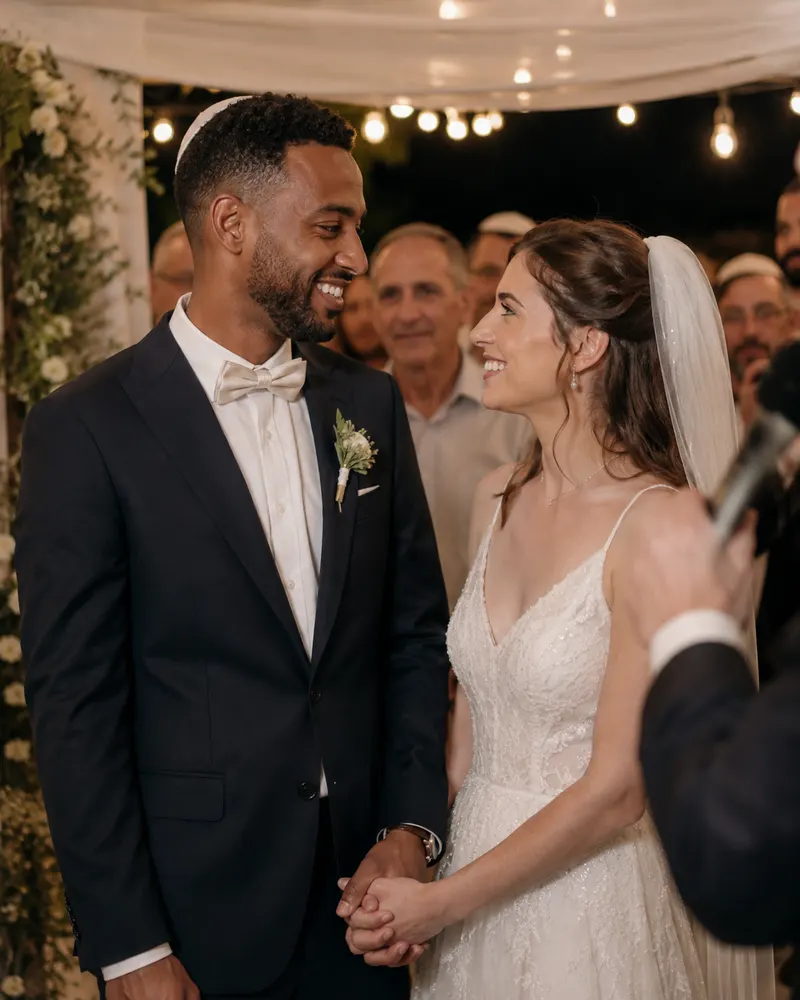
- Keep the front area, near the stage and the chuppah, for immediate family tables
- Brief the staff so casual guests are not seated at the marked tables
Careful work on reserved tables prevents the awkward moment when an aunt finds herself seated far from the family, and it saves you uncomfortable phone calls after the wedding.
Seating arrangements do not have to be the nightmare of wedding planning. With a digital invitation that keeps RSVPs and your seating map in one place, most of the work nearly does itself. We would love to walk the whole way with you, from choosing a package that fits to the smallest details, in a relaxed WhatsApp chat with us at Paper of Love.