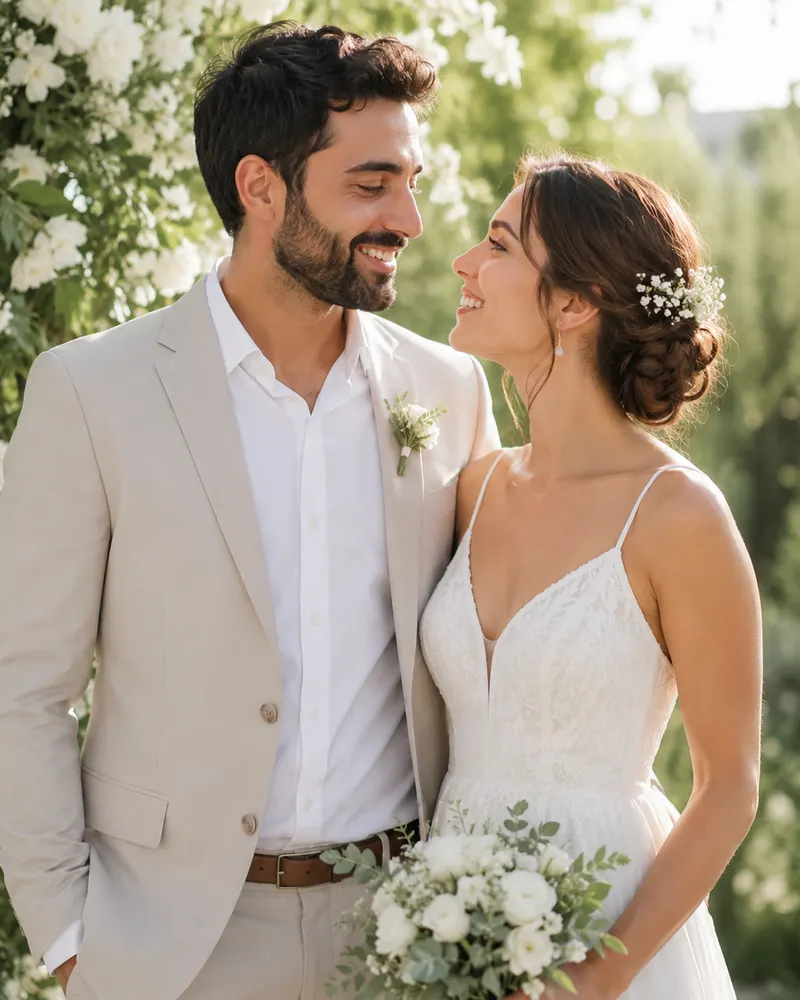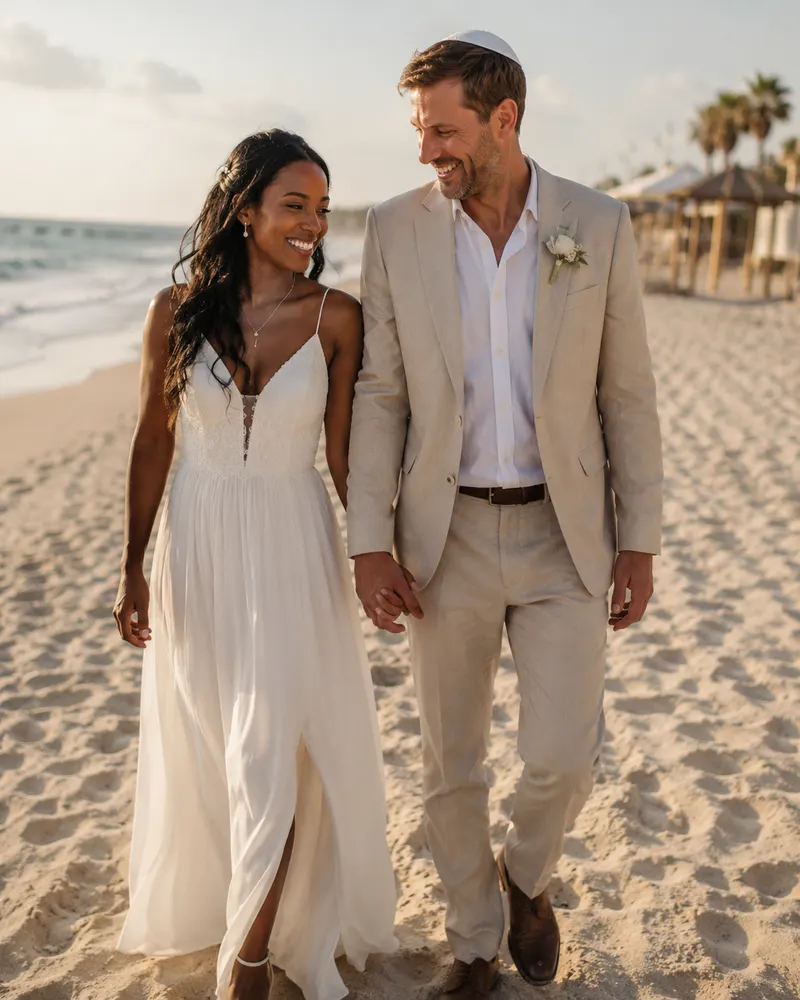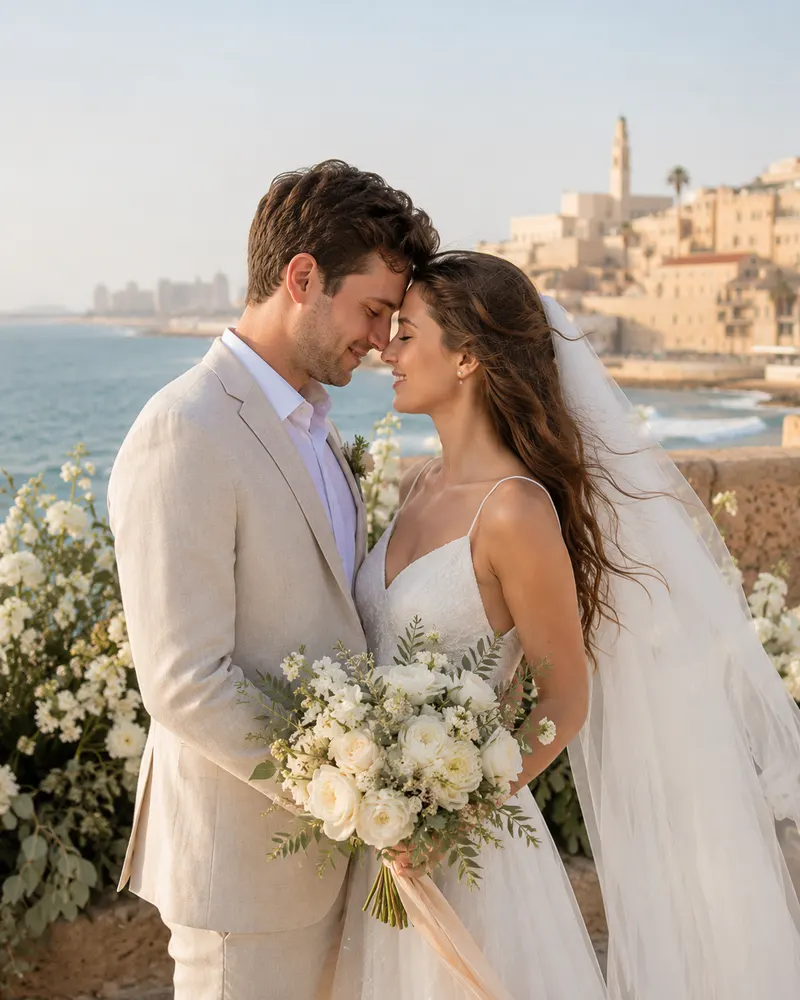
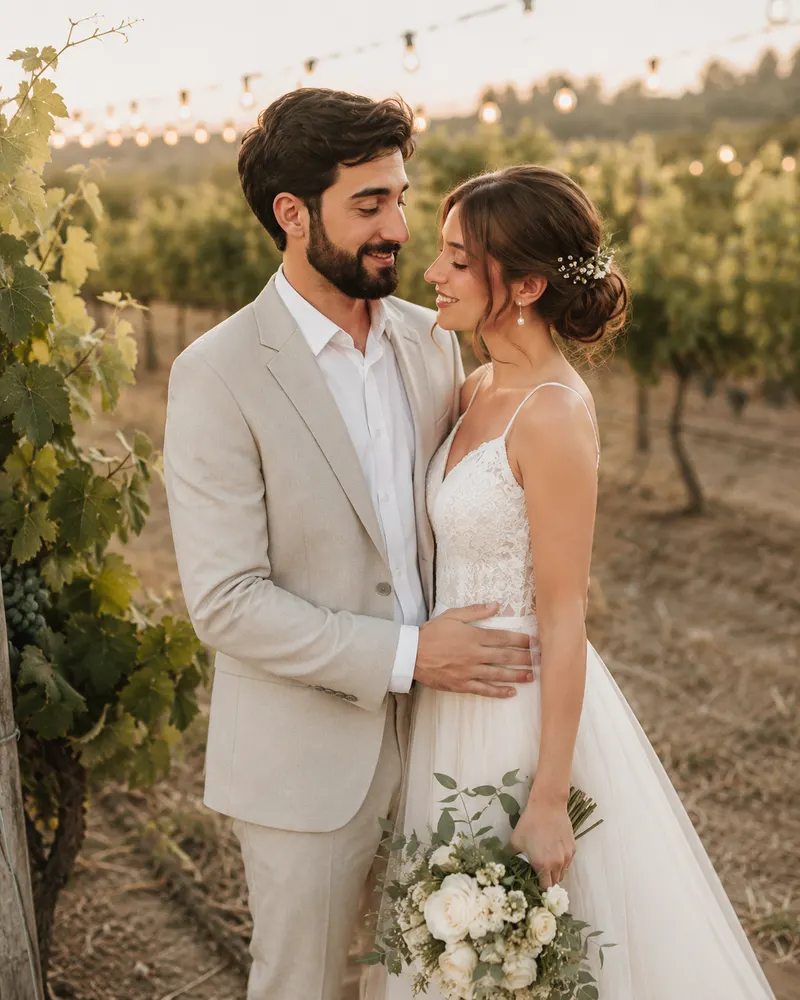
The bouquet, the table styling, and the chuppah already speak in flowers, so it feels natural for the invitation to open the same way. A floral wedding invitation is the easiest way to signal romance and season before a guest has read a single word. Here we walk through choosing a motif by season, the difference between watercolor and line-art, smart color pairings, and most importantly, how to keep the florals restrained so the text stays clear on a phone screen.
Why flowers, and why digital
Flowers are the common thread of nearly every wedding in Israel, from a grand banquet hall in Gush Dan to an open-air event garden up north. They are warm, familiar, and ask nothing of the guest to understand the mood. In a digital version they gain an extra edge: leaves that drift gently, a bouquet that opens with a small animation, and colors that stay vivid instead of dulling the way they can in print.
Beyond looks, a floral digital invitation works for you. It is sent over WhatsApp to your whole guest list, with an RSVP button, direct navigation through Waze or Google Maps, and one-tap add-to-calendar. If you want the wider picture before diving into design, it is worth reading the complete guide to digital wedding invitations.
Choosing a botanical motif by season
The common mistake is picking a flower because it looked pretty in a reference photo, with no regard for when you are marrying. A motif that echoes the month feels far more authentic.
- Spring (March to May): peonies, cherry branches, and almond blossom. Soft, pink, and full of movement.
- Israeli summer (June to August): wildflowers, small sunflowers, and olive branches. The olive in particular feels local and ties into the Mediterranean landscape.
- Autumn (September to November): warmer tones, dried eucalyptus, and terracotta-hued foliage.
- Winter (December to February): deep greens, olive and eucalyptus that look lovely even without a bold colored bloom.
Eucalyptus is the safe choice all year: it is neutral, sits well on any palette, and does not lock you into a particular season.
Watercolor versus line-art
This is the decision that sets the entire character of the invitation, so it is worth pausing on.
- Watercolor: soft washes of color with gentle transitions. It reads as romance, warmth, and a classic wedding. It suits an outdoor chuppah or a boutique hall especially well.
- Line-art: thin outlines, usually in a single color, with no fill. It reads as current, clean, and minimal, and pairs beautifully with modern typography.
On a phone screen line-art usually stays crisper and easier to read, while watercolor needs a little more care around the margins. If you are torn between the styles, invitation design ideas by style will help you find the direction that fits you.
Color pairings that work
The flowers set the tone, but the palette has to stay tight. A simple rule of thumb: one main flower color, one complementary foliage color, and one neutral text color.
- Peach peonies with soft green foliage and charcoal text.
- Cream-and-dusty-blue wildflowers on an off-white ground.
- Deep-green olive branches with sand-toned text and restrained gold.
Avoid more than three dominant colors. The moment the palette scatters, the invitation starts to feel busy and the eye no longer knows where to land first.
How to keep the florals from overwhelming the text
This is the number-one problem with floral invitations: a gorgeous design you cannot read. A few rules that hold the balance:
- Do not fill the whole background with flowers. A corner frame, a top band, or a small bouquet at the bottom with a clean center for the text reads far better.
- Keep generous inner margins between the flowers and the letters, so the names never touch a leaf.
- Contrast above all. Dark text on a light ground, never light text on a busy watercolor.
- Check it on a phone. What looks balanced on a large screen can crowd on a phone, and that is where most guests will open the invitation.
Hello everyone! With joy and excitement, we, Noa and Itai, invite you to celebrate our wedding on Tuesday, the 22nd of Av 5786, 11 August 2026, at the Nof HaZeitim event garden in Moshav Beit Zayit. The bouquet is picked, our hearts are open, and you are invited. To RSVP, navigate, and add it to your calendar, everything is waiting here at the link.
This short wording shows the principle: when the floral motif frames the message rather than flooding it, the guest reads everything easily and taps RSVP within seconds.
Practical details before you order
A floral digital invitation usually costs between roughly 150 and 450 shekels, depending on the package and add-ons like animation, a landing page, or an RSVP system. That is normally a real saving compared with printing and postage. Payment is easy to settle through Bit or PayBox, and the finished invitation arrives ready to send on WhatsApp.
With the details in hand, you can pick a package and continue with us on WhatsApp to design a floral invitation that feels exactly like you. We would love to walk with you from the first sketch to the message ready to send.